 Isuru
Isuru Most tool migrations stall in the first couple of weeks. The new tool is ready, but the old one is still open in a tab, people keep using it out of habit, and a few months later nothing has really moved.
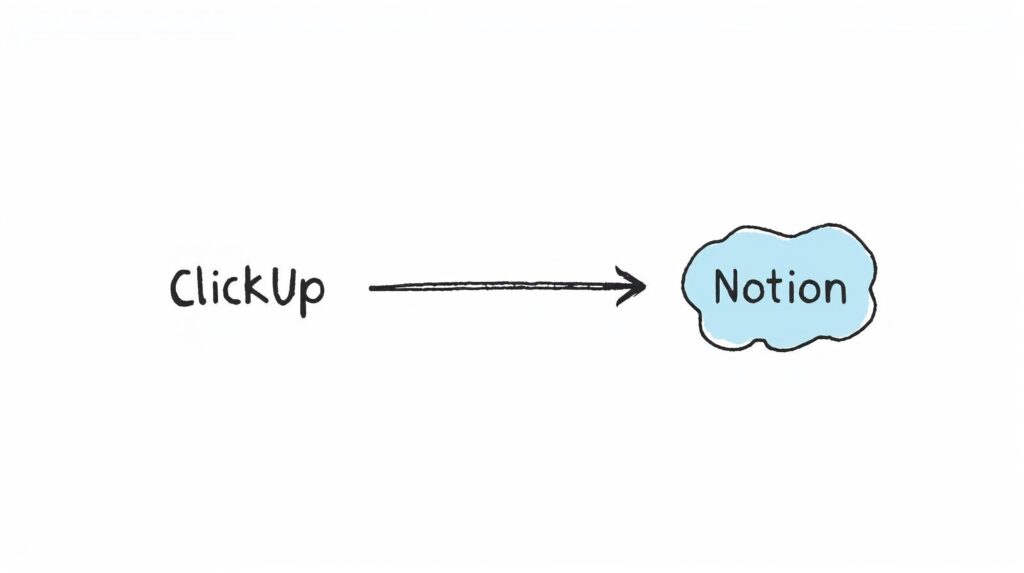
The podcast production team I worked with had been on ClickUp for two years. It worked well, but their Notion workspace had grown alongside it, and splitting project management in ClickUp from everything else in Notion was creating friction. They wanted one place.
The Challenge
The real risk in a migration isn’t the new tool, it’s the gap between the old workflow stopping and the new one actually working. Teams that run both in parallel for too long never fully commit to either.
For this team the specific worry was episode continuity. They had 6 active shows and more than 30 episodes in production at various stages, each with its own tasks, notes, and assets. Moving mid production meant nothing could fall through.
The Approach
The plan was to stage the move so the team never worked without a system they trusted. Nothing got migrated until the new workspace was proven, and the old tool stayed available until the new one had taken over. The order of the steps mattered more than the speed.
The Build
Map before moving. Before touching either tool, I documented every workflow the team used in ClickUp: task types, statuses, recurring work, assignees, and notifications. Not to copy them one for one, but to know what couldn’t be lost.
Rebuild first, migrate second. I built and tested the Notion workspace before moving anything. The team used it in parallel for two weeks on new episodes only, so no existing episode moved until they were comfortable with the new structure.
Freeze the old tool. On migration day, ClickUp went read only for reference. No new tasks were created there. The team had one week to move in progress episodes by hand, and after that week ClickUp was closed.
Move one show at a time. Instead of moving episodes in the order they were recorded across all shows, I moved one whole show over before starting the next. That kept each show’s episodes together and let the people who run that show confirm nothing was missing before we moved on.
What Got Left Behind
ClickUp has a couple of features Notion doesn’t, like built in time tracking and dependency chains. Neither was blocking. The team had used time tracking but didn’t rely on it, and dependency chains were rare in their work.
The honest version is that they gave up some ClickUp features they had but weren’t using. In return they got one workspace where episode production sits next to show notes, client communication, and the asset library.
The Result
In the end, everything lived in Notion. The team ran their full production there and stopped going back to ClickUp.
What I Learned
The migration worked because each step was proven before the next one started. The team didn’t leave ClickUp until Notion was already doing the job. Building and proving the new system before switching off the old one is the part most migrations skip.